
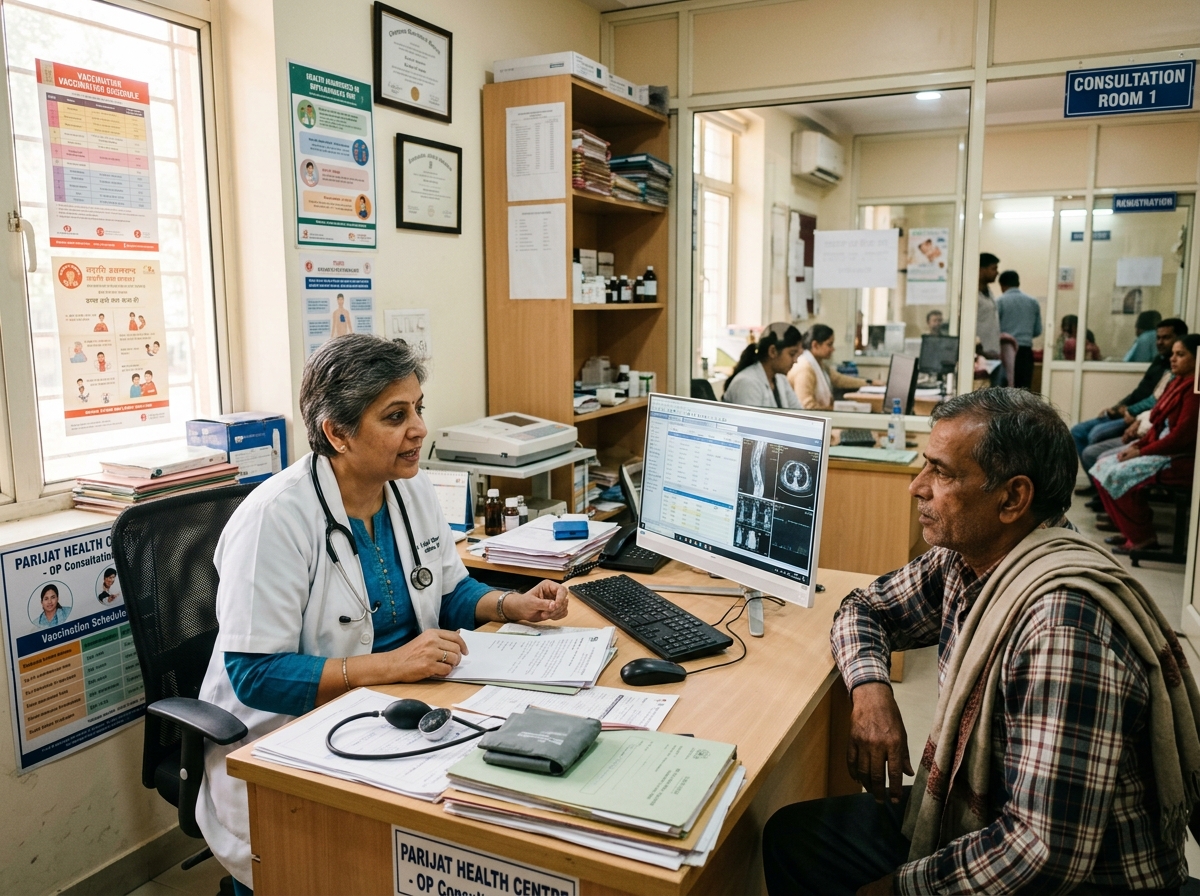
The first question every clinic asks is what happens to the patients they already have. The answer should be that they arrive with you, safely, and that you can see exactly what will happen before it does.
Start with a CSV
The importer reads CSV files. If your list lives in a spreadsheet, save it as CSV first. If it lives in a paper register, type the names, phone numbers and dates into a sheet once. The importer recognises the column names most systems use, such as Patient Name, UHID or Mobile No., and works out the delimiter on its own.
Always run the dry run first
Import is a two-step process. The first step validates the file and creates nothing. You get a report of every row that could not be read, with the reason, and a list of duplicates that would be skipped. Only when you are satisfied do you commit, and the commit runs in batches of 200 rows.
What the importer does for you
- Normalises phone numbers to one form, so a patient who types their number differently later is still found.
- Understands several date formats, and strips the invisible marks some spreadsheet exports add.
- Skips duplicates, matched by record number, phone number, or name plus date of birth. It never merges two records on its own.
- Keeps an age as an age. It does not invent a birth date from it.
What it will not do
Imported patients receive care-delivery consent only. They are not opted in to reminders or to any AI feature, because their consent has to come from them. The importer brings in patients, not visit history, prescriptions or billing. A single file can hold up to 20,000 rows and 8 MB, and importing is limited to a clinic administrator.